
The cabinets went in on a Tuesday, the quartz landed on a Thursday, and the kitchen finally looked like the drawing. Then the refrigerator arrived and stood six inches proud of the run, throwing a shadow across the counter and catching a hip every time someone walked the aisle. Nothing about it was broken. It was simply a 36-inch box built to sit in a wall, dropped into a kitchen designed around a flush line, and that mismatch is the reason high end refrigerators exist as a separate category rather than as a nicer version of the same appliance.
The encouraging part is that every one of those problems is a specification problem, and specification problems get solved on paper long before a truck shows up. At Direct Appliance, our team works with Modesto, Turlock, Oakdale, Ripon, and Manteca homeowners, designers, and contractors on kitchens at every stage, from a single replacement in a 1970s opening to a full remodel where the cabinet drawings are still in redline. This guide covers what actually separates premium refrigeration from mainstream models, the four installation formats and what each demands from your cabinetry, the preservation features that earn their keep, a side-by-side comparison of formats, the honest trade-offs, how to measure and order, long-term maintenance, and seven models worth putting on your list.
Build the Kitchen Around a Refrigerator That Fits
Direct Appliance carries built-in, panel ready, and column refrigeration from the brands Central Valley designers specify, with real spec sheets and real measurements before you order. Our team coordinates panels, openings, delivery, and installation so the appliance matches the kitchen you drew.
Explore high end refrigeratorsKey Takeaways
- Engineering, not badging, defines the tier: Dual compressors, dual evaporators, variable-speed inverters, and managed airflow hold a tighter temperature band, and a tight band is what keeps food alive longer.
- The format decision comes before the feature decision: Freestanding, built-in, fully integrated, and column each ask something different from your cabinets, your ventilation, and your remodel timeline.
- Capacity is traded for fit: A built-in or counter depth cabinet gives up usable cubic feet compared with a deep freestanding unit of the same width, and that trade is the point.
- Service coverage is part of the purchase: At this price, who repairs the sealed system and how fast parts arrive matters as much as the drawer glides.
What Defines a High End Refrigerator
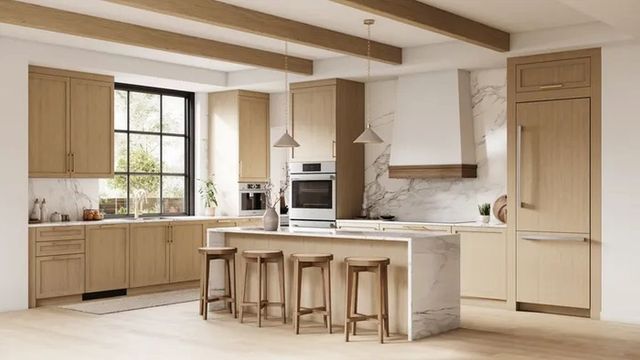
Price is the least useful way to sort this category. Plenty of mainstream refrigerators carry a premium sticker because of a touchscreen and a finish. What separates genuine high end refrigerators is a short list of mechanical decisions that cost money to build and that you feel every day without ever seeing them.
Start with cooling architecture. A mainstream refrigerator typically runs one compressor and one evaporator, sharing chilled air between the fresh food and freezer compartments through a damper. That single air path is why an open box of baking soda is standard equipment in most kitchens. Premium units split the job:
- Dual or independent compressors: Each compartment gets its own cooling circuit, so the freezer cycling on does not pull the refrigerator temperature with it.
- Dual evaporators: Separate cold-air sources mean freezer air never mixes with fresh food air, which keeps freezer burn down and stops last night’s salmon from finding the strawberries.
- Variable-speed inverter compressors: Instead of slamming on and off at full power, the compressor modulates, holding a steadier temperature while drawing less energy and making less noise.
- Managed airflow: Multiple vents, sensors, and dampers per compartment rather than one shared duct, so the temperature at the back of the top shelf resembles the temperature at the front of the bottom one.
Why Temperature Stability Beats Temperature Setting
Most people judge a refrigerator by its number. The number matters less than the swing around it. A unit that averages 37 degrees but oscillates between 33 and 42 as the compressor cycles is warming and re-chilling your food several times a day, and each of those trips accelerates spoilage.
Holding a narrow band, roughly a degree or two, is expensive to build. It requires the sensors, the modulating compressor, and the split evaporators listed above working together. Layer humidity control on top of that and produce behaves differently: high humidity for leafy greens that lose water, lower humidity for apples and stone fruit that rot when moisture collects.
Air treatment does the rest of the work. Ripening fruit gives off ethylene gas, which speeds the ripening of everything near it. Filtration systems that scrub ethylene and odors are one of the few features whose effect you can see, usually as berries and herbs that last a few extra days instead of turning in 48 hours.
Separating Real Upgrades From Showroom Upgrades
On a showroom floor, everything at this tier looks equally impressive, so use a simple filter. Ask whether a feature changes how the appliance cools, how it is built, or how it is supported. If it does none of those three, it is decoration.
- Changes cooling: compressor count, evaporator count, inverter drive, sensor count, air purification, independent zones.
- Changes construction: heavy-gauge stainless inside and out, full-extension metal drawer glides with soft-close, tempered glass shelving rated for weight, hinges engineered to carry a custom wood panel without sagging.
- Changes support: longer sealed system warranty coverage, factory-authorized service networks, published parts availability.
- Changes neither: color-changing interior lighting, novelty door graphics, an extra app screen that duplicates a control panel.
That last group is not worthless, but it should never be the reason you move up a tier.
Configurations: Built-In, Integrated, Column, and Freestanding
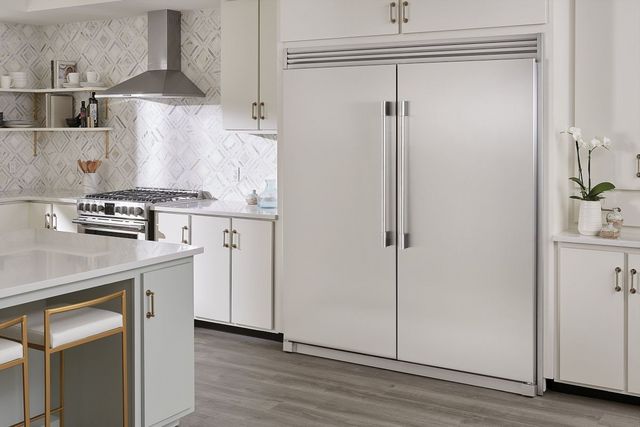
Format decides more about your kitchen than any feature list. It sets the cabinet drawings, the ventilation plan, the electrical rough-in, and often the order date. Getting the format right early is what prevents the six-inch overhang described at the top of this article.
Premium freestanding units are standard-depth boxes with upgraded materials, finishes, and sometimes upgraded cooling. They slide into a normal opening, need no cabinetry work, and hold the most food per dollar. They also stick out past a 24-inch base cabinet by several inches, which is exactly the look some kitchens want and others cannot tolerate.
Built-in refrigerators are engineered to sit flush with a 24-inch cabinet run, venting through a grille at the top rather than out the back. They are taller, usually 80 to 84 inches, and they are anchored to the surrounding cabinetry. Doors are often available in stainless or panel ready.
Fully integrated units take that a step further. The cabinet, the grille, and the doors all disappear behind custom panels made by your cabinetmaker, with hinges rated to carry the panel weight. Done well, a guest cannot find the refrigerator.
Column refrigeration splits the appliance into separate refrigerator and freezer units, each typically 18, 24, 30, or 36 inches wide, installed side by side or in different zones entirely. A 30-inch refrigerator column next to the prep sink and a 24-inch freezer column near the pantry is a layout that a single box cannot produce.
What Built-In Installation Actually Requires
Flush installation is unforgiving because the tolerances are small and the cabinet is usually built first.
- A cabinet opening cut to the manufacturer’s published width, height, and depth, not to a rounded number.
- Clear ventilation at the top grille, since built-in units exhaust heat upward and a blocked grille shortens compressor life.
- A dedicated electrical circuit positioned where the spec sheet says, not wherever the outlet happened to be.
- A water line for ice and dispensing, stubbed at the correct height and side.
- Anti-tip or securing hardware fastening the cabinet to framing, which is a code and safety item, not an option.
- Floor that is level and strong enough, because these units are heavy and a 48-inch side-by-side is genuinely heavy.
The Capacity Trade and the Timing Trade
Built-in and counter depth formats give up usable volume compared with a deep freestanding unit in the same width, sometimes several cubic feet. That is the cost of a flush line. Shoppers who want the flush look without the built-in price often land on counter depth refrigerators as the middle path, accepting a slightly shallower box in a standard opening.
Timing is the trade nobody warns you about. Built-in, integrated, and column units must be specified before cabinetry is fabricated, because the cabinet is built around the appliance rather than the other way around. Choosing the refrigerator after the boxes are hung means either modifying cabinetry or changing your selection.
Read More: Best Built In Refrigerator Models for High-End Kitchens | 5 Best Counter Depth Refrigerators of 2026
Preservation and Food Storage Features Worth the Investment
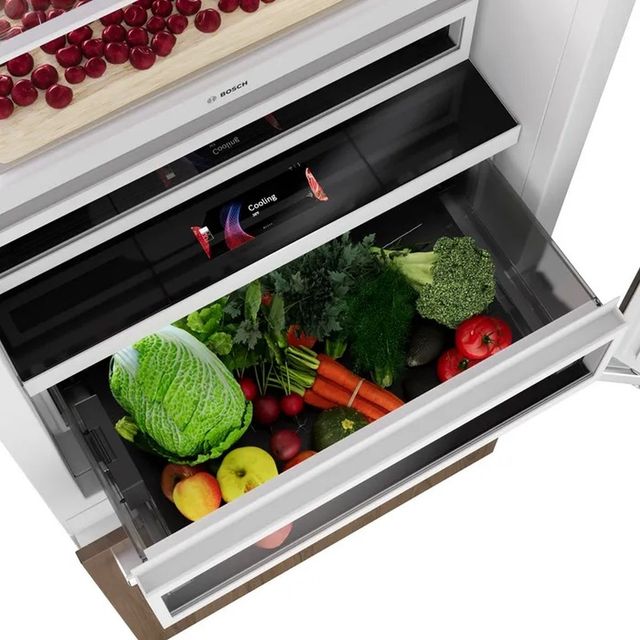
Once the format is settled, features become a question of how you actually shop and cook. A household that buys a week of groceries every Sunday needs something different from one that stops at the market three times a week.
Zones, Drawers, and Vacuum Seals
Independent temperature zones are the headline feature at this tier. A convertible drawer that runs as refrigerator, freezer, meat keeper, or beverage chiller turns one compartment into whatever the week demands. Set it cold for fish on Thursday, set it to soft freeze for the Costco run on Saturday.
Vacuum-seal and controlled-atmosphere drawers go further by lowering the oxygen or holding a defined humidity. Proteins and produce want opposite conditions, which is the whole reason separate drawers exist rather than one big bin. Odor separation between all of those compartments depends on the dual evaporator design described earlier, because compartments that share air share smells.
Ice, Water, and Light
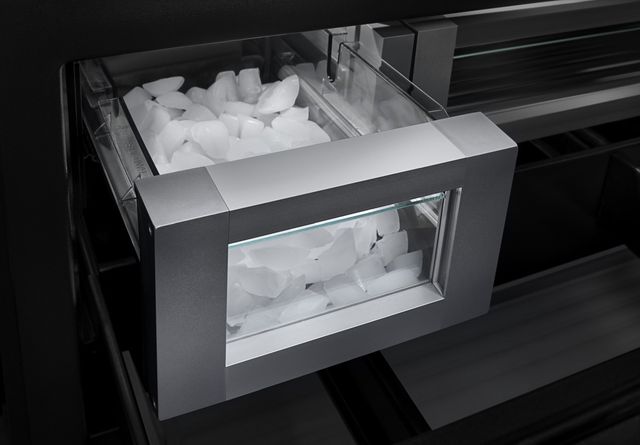
Ice is where premium units break away from the pack. Look for a dedicated ice maker with its own production capacity, clear or craft ice systems that freeze slowly to push out trapped air, and dual ice makers when the household entertains. Ice quality tracks water quality closely, so filtration is not a side note here.
Water filtration and dispensing come in two shapes: an external dispenser in the door, which is convenient and interrupts a panel ready facade, or internal dispensing that preserves a clean front. Lighting sounds cosmetic until you have used it. Full-height LED columns and graduated theater lighting eliminate the shadow at the back of the bottom shelf, which is where food goes to be forgotten.
Matching Features to How You Shop
- Weekly bulk shopper: Prioritize total capacity, convertible drawers, and a strong freezer with its own evaporator.
- Near-daily fresh shopper: Prioritize humidity control, ethylene filtration, and produce drawer quality over raw cubic feet.
- Frequent entertainer: Prioritize ice production, dual ice makers, beverage zones, and full-width shelving for platters.
- Wine and specialty storage: Prioritize a dedicated wine column or beverage zone rather than asking one compartment to do two jobs.
- Batch cook and freeze: Prioritize freezer organization, full-extension drawers, and fast-freeze modes over dispenser features.
High End Refrigerator Configurations Compared
The table below compares formats rather than brands, since format is the decision that constrains everything after it. Find the row that matches your kitchen situation first, then shop features inside that row.
| Format | Typical Width | Installation Demand | Capacity vs. Footprint | Price Tier | Best Fit |
|---|---|---|---|---|---|
| Premium freestanding | 30 to 36 inches | Drop into an existing opening | Highest usable volume | Entry premium | Replacement with no cabinet work |
| Built-in counter depth | 30 to 48 inches | Cut opening, top venting, secured to framing | Moderate, flush line costs depth | Mid to upper premium | Full remodel with a flush cabinet run |
| Fully integrated panel ready | 24 to 42 inches | Custom panels, rated hinges, exact cutout | Moderate, panels add front thickness | Upper premium | Design-led kitchen where the box should disappear |
| Refrigerator and freezer columns | 18 to 36 inches each | Multiple openings, separate utilities | Efficient per opening, flexible split | Highest | Large kitchen or a zoned layout |
| Under-counter and specialty | 15 to 24 inches | Base cabinet bay, front venting | Small, purpose-built | Varies widely | Island beverage center, wine, or a butler’s pantry |
Read it by project type. A new build or full remodel can support any row because the cabinets are still being drawn. A cabinet-level remodel usually lands on built-in or integrated. A straight replacement in a kitchen you are not touching almost always belongs in the freestanding or counter depth rows, because rebuilding a cabinet to accept a built-in unit is real carpentry.
Design, Finishes, and Smart Technology
Appearance at this tier is a system decision, not a single-appliance decision. The refrigerator sits in a room with a range, a hood, wall ovens, and a dishwasher, and mismatched handles across those pieces are visible from the next room in an open floor plan.
Exterior options fall into three broad camps. Professional stainless with heavy tubular handles reads as a working kitchen and pairs naturally with a pro range. Fingerprint-resistant finishes solve the daily reality of a family kitchen without giving up the metal look. Custom panel integration hides the appliance entirely, and glass or showcase doors do the opposite by putting the interior on display.
Connected Features That Actually Earn Their Place
Most refrigerator apps are a solution looking for a problem. Two exceptions are worth the setup time:
- Temperature alarms and door-ajar alerts: A phone notification that a door did not latch or that a compartment has drifted can save several hundred dollars of food.
- Remote diagnostics: When the unit can report a fault code to a technician before the visit, the technician arrives with the right part, which turns two service calls into one.
- Filter reminders: Small, but water and air filters get forgotten, and a forgotten filter degrades ice quality first.
- Voice and scheduling integration: Pleasant, rarely decisive, and not a reason to move up a tier.
Efficiency, Noise, and the Long-Horizon Cost
ENERGY STAR certification, variable-speed compressors, and thicker cabinet insulation matter more here than the sticker suggests, especially in the Central Valley where a kitchen can run warm from June through September and the compressor works against ambient heat all afternoon. A well-insulated built-in cabinet holds its performance across years rather than degrading quietly.
Noise is the feature open-concept homeowners underrate. A modulating compressor that murmurs is a different living experience from one that announces every cycle across an island into a family room.
The honest counter to sticker shock is service life. A mainstream refrigerator is commonly replaced at 10 to 13 years, and repair economics often argue for replacement rather than fixing it. Premium built-in units are built and supported with a 15 to 20 year horizon, with published parts availability and technicians trained on the sealed system. Spread across that span, with panels and cabinetry that stay in place through a door replacement, the annual cost narrows considerably from what the tag implies.
Read More: Best Glass Door Refrigerators for Today’s Kitchens | 6 Reasons Pros Love Thermador Refrigerators
High End Refrigerators Pros and Cons Before You Commit
A premium refrigerator buys precision, integration, materials, and support. It does not buy more food storage per dollar, and it does not make itself easy to install. Weighing both sides honestly against a well-equipped mainstream model is the fastest way to know whether this category is right for your kitchen.
Pros
Tighter temperature and humidity control
Independent compressors and evaporators hold a narrow band, which is what actually extends the life of produce, dairy, and proteins.
True cabinetry integration
Flush installation and custom panels let the appliance sit inside the design instead of interrupting it.
Materials and hardware that hold up
Heavy-gauge stainless, full-extension metal glides, soft-close drawers, and hinges rated for panel weight survive a decade of daily use.
Longer expected service life
A 15 to 20 year horizon with available parts changes the replacement math compared with a unit designed for roughly a decade.
Stronger warranty and service support
Extended sealed system coverage and factory-authorized technicians mean a compressor issue in year eight is a repair conversation, not a replacement conversation.
Layout freedom with columns
Splitting refrigeration and freezing into separate units opens kitchen plans a single box cannot support.
Cons
A significantly higher purchase price
The gap over a premium mainstream model is large, and much of what you are paying for is invisible on a showroom floor.
Higher repair and parts costs
Specialized components and factory-authorized labor cost more per visit, even when the unit needs fewer visits.
Installation complexity
Cutouts, top venting, panel fabrication, secured mounting, and heavy delivery all add cost and coordination beyond the appliance itself.
Less usable capacity per width
Built-in and integrated formats give up cubic feet to achieve a flush front, which surprises shoppers cross-shopping by capacity alone.
How to Choose the Right High End Refrigerator for Your Kitchen
Work in sequence and the decision gets simple. Work out of order and you will fall in love with a feature set that does not fit the opening.
- Settle the format. Freestanding, built-in, integrated, or column. This one choice eliminates most of the market immediately.
- Lock the dimensions. Width, height, and depth of the opening, plus required ventilation clearance and door swing against adjacent walls or islands.
- Rank preservation priorities. Use the shopping-style list from earlier rather than a feature checklist.
- Choose finish and integration. Stainless, fingerprint-resistant, or panel ready, coordinated with the rest of the suite.
- Set the budget last, including panels, hardware, professional installation, and any electrical or plumbing work.
The Measuring and Specification Steps That Get Skipped
Cabinet openings are rarely as square as they look, especially in the older ranch homes around McHenry Avenue and in the mid-century neighborhoods of Modesto and Ceres. Here is the habit our installers use on every built-in measure, and it takes about three minutes: measure the opening width at the floor, at mid-height, and at the top, measure the height at both the left and right jambs, and measure the depth from the back wall to the front edge of the base molding rather than to the drywall. Then specify to the smallest number in each set. Openings that are three-quarters of an inch out of square from top to bottom are common in homes built before 1990, and a built-in unit that is fitted to the widest measurement will not go in.
Two more items belong on the pre-purchase checklist. Confirm lead times early, because built-in, integrated, and column units frequently carry longer lead times than freestanding models and often need to be ordered before cabinetry is fabricated. Then confirm the delivery path: doorway widths, hallway turns, stair landings, and whether the crew needs extra hands for a unit that can exceed 700 pounds.
Last, check local service coverage before you buy, not after. Ask which authorized service company covers your brand in Stanislaus County, what typical parts lead times look like, and whether the sealed system warranty is honored locally. It is the factor most buyers skip, and it is the one they care about most in year seven.
Maintenance and Long-Term Ownership
Premium refrigeration rewards a little attention and punishes neglect slowly, which is why problems tend to show up as gradual performance loss rather than a sudden failure.
The routine is short. Vacuum the condenser and clean the top grille on the schedule in your manual, replace water filters roughly every six months and air filters annually, wipe and inspect door gaskets for cracks or sticky residue, and keep the ventilation path above the unit clear of stacked cabinet clutter. In the Central Valley, add one item: dust and orchard debris load condenser coils faster here than in coastal climates, so pull the grille and look at it seasonally rather than annually.
Settings, Loading, and Ice
Set the refrigerator around 37 degrees and the freezer at zero, then leave them alone for 24 hours before judging any change. Loading matters more than most owners expect in units with independent zones, because packing items tight against a rear vent starves airflow to an entire shelf. Leave a finger’s width around vents.
Ice quality is a filtration story. Cloudy or off-tasting ice usually traces back to an overdue filter, a water supply high in minerals, or ice that has sat long enough to absorb odors. Run the cleaning cycle the manual specifies, dump the bin after a long vacation, and keep filters current.
Finish Care and When to Call
- Stainless steel: Wipe with the grain, never across it, using a cleaner made for stainless rather than an abrasive.
- Fingerprint-resistant coatings: Water and a microfiber cloth. Solvent cleaners degrade the coating that makes them work.
- Custom wood panels: Treat them exactly as your cabinetmaker specified for the rest of the kitchen, and keep standing water off the bottom edge.
Register the appliance at purchase, since warranty claims move faster when the serial number is already on file, and connected models can hand a technician a fault history before the visit. Call for service rather than troubleshooting when one zone drifts while the other holds, when the compressor cycles unusually often or runs continuously, or when condensation appears inside the cabinet. Those three symptoms point at the sealed system or the defrost circuit, which is warranty territory and not a homeowner repair.
Refrigeration Planning for Central Valley Kitchens
Modesto’s climate and housing stock change this decision in ways a national buying guide never accounts for. Summer here runs long and genuinely hot, with stretches above 100 degrees from June into September, and that ambient heat is the load your compressor fights all afternoon. Valley water is hard, which shows up as scale in ice makers and filters that clog ahead of schedule. Housing stock skews toward 1950s through 1980s ranch homes with narrow original refrigerator alcoves, often 33 or 36 inches, framed before anyone imagined a 48-inch built-in. And this is farm country, so kitchens here handle August tomatoes by the flat, backyard peaches, almonds and walnuts by the sack after harvest, and a freezer that needs to swallow a quarter of beef in one afternoon.
- Plan for ambient heat, not just cubic feet. Verify the model’s rated ambient operating range and keep the top grille clear, since a built-in unit in a warm valley kitchen exhausts heat upward and needs that path open.
- Skip the uninsulated garage for a second refrigerator. Garage temperatures here regularly exceed what a standard refrigerator is rated to handle, and a garage-ready or purpose-built unit is the right answer rather than a retired kitchen model.
- Budget for filtration up front. Hard valley water shortens filter life and clouds ice, so plan on a shorter replacement interval and consider whole-home treatment if spotting is already a problem elsewhere in the house.
- Size the freezer for harvest, not for an average week. Households that put up produce, buy beef in bulk, or store nuts after harvest usually need a freezer column or a dedicated unit rather than the freezer half of a side-by-side.
- Measure the original alcove before falling for a 48-inch unit. Many valley kitchens can accommodate one only by taking a cabinet, which is a carpentry conversation worth having before the appliance conversation.
- Coordinate with the trades early in a remodel. Modesto-area cabinet shops and contractors need the appliance spec sheet before fabrication, and columns need it earliest of all.
Read More: Benefits of Buying a Sub-Zero Fridge | Luxury Kitchen Appliances: Features, Brands, and Buying Tips
The Best High End Refrigerators Available at Direct Appliance
The seven models below span the formats compared earlier, from a single 33-inch column to a pair of 48-inch built-in side-by-sides, in stainless and panel ready. They are grouped loosely by kitchen situation rather than by price, so match the description to your opening and your project stage before comparing feature lists.
Frigidaire Professional® 33” 18.9 Cu. Ft. Stainless Steel Built-In Column Refrigerator

Column refrigeration is the most flexible format in this guide, and this is the accessible way into it. As an all-refrigerator column, its 18.9 cubic feet are devoted entirely to fresh food, which is a lot of produce, dairy, and leftovers for a household that shops often. The 33-inch width is a useful size, since many Modesto kitchens already have an alcove in that range. Pair it with a freezer column now or later, or run it alongside an existing freezer. The professional stainless exterior suits a working kitchen with a pro range and hood.
Top Features
- All-refrigerator column format: Every cubic foot serves fresh food, with no freezer compartment competing for space or airflow.
- 33-inch built-in width: Sits flush with a cabinet run and often fits an existing alcove without major carpentry.
- 18.9 cubic feet of fresh food capacity: Generous room for weekly bulk shopping, platters, and full-height items.
- Professional stainless exterior: Coordinates with pro-style ranges and hoods in a suite-matched kitchen.
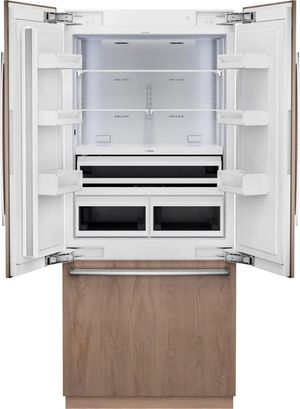
Bosch Benchmark® Series 36” 20.1 Cu. Ft. Panel Ready Built-In French Door Refrigerator with Softclose® Flat Hinge
Shop French Door Refrigerators
This is the fully integrated remodel in one appliance. Panel ready construction means your cabinetmaker’s doors go on the front and the refrigerator disappears into the run, while the Softclose flat hinge is the detail that makes the illusion work by handling panel weight and closing the door quietly rather than letting it swing. French doors keep the swing radius tight in a 36-inch opening, which matters in a galley or against an island. Best suited to a design-led kitchen where the cabinet drawings are still open and the refrigerator is meant to be invisible.
Top Features
- Panel ready front: Accepts custom cabinet panels so the unit reads as cabinetry rather than as an appliance.
- Softclose flat hinge: Engineered for the weight of a custom panel and closes the door gently instead of slamming.
- 36-inch built-in width: The most common premium built-in size, which keeps cabinet planning straightforward.
- French door configuration: Narrower door swing than a single wide door, an advantage in tight walkways.
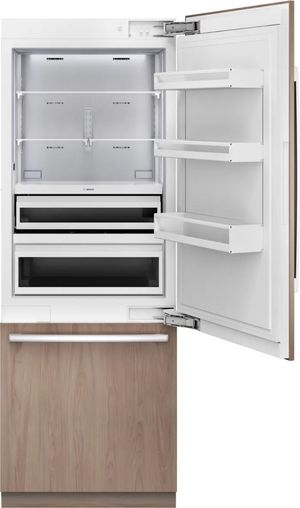
Bosch Benchmark® Series 30” 16.5 Cu. Ft. Panel Ready Built-In Bottom Freezer Refrigerator
Shop Bottom Freezer Refrigerators
Not every kitchen has 36 inches to give, and that is exactly the problem this model solves. At 30 inches wide with 16.5 cubic feet and the same panel ready integration as its larger sibling, it brings full built-in treatment to a narrower opening, a smaller kitchen, or a butler’s pantry where a second refrigerator serves entertaining. The bottom freezer layout puts fresh food at eye level, which is the right priority for households that reach for produce far more often than for frozen items. A strong fit for condos, casitas, and remodels working within an original footprint.
Top Features
- 30-inch built-in width: Full integration in a narrower opening, useful where a 36-inch unit will not fit.
- Panel ready design: Custom panels let it match surrounding cabinetry exactly, including in a secondary kitchen.
- Bottom freezer layout: Fresh food sits at eye level and frozen items live in a pull-out drawer below.
- 16.5 cubic feet of capacity: Right-sized for smaller households and for entertaining-support refrigeration.
Monogram® 48” 28.6 Cu. Ft. Stainless Steel Built-In Side-by-Side Refrigerator

Shop Side-by-Side Refrigerators
When the kitchen is large and the household cooks at volume, 48 inches is the answer. This Monogram side-by-side puts 28.6 cubic feet behind a flush stainless front, with full-height refrigerator and freezer columns side by side so tall items fit on both sides. Side-by-side is the layout for households that use the freezer heavily, which in this area means harvest storage, bulk beef, and stocked ice. Monogram sits at the design-forward end of the premium tier, so it suits a showcase kitchen where the refrigerator is meant to be seen rather than hidden.
Top Features
- 48-inch built-in width: The largest format in this lineup, sized for open kitchens and serious entertaining.
- 28.6 cubic feet of capacity: Substantial storage on both the fresh food and freezer sides.
- Side-by-side full-height columns: Tall bottles on one side and tall frozen items on the other, both at reachable height.
- Stainless steel built-in exterior: Flush with cabinetry while still reading as a statement appliance.
KitchenAid® 48” 29.4 Cu. Ft. PrintShield™ Stainless Steel Built-In Side-by-Side Refrigerator features Exterior Water and Ice Dispenser with Measured Fill

Shop Side-by-Side Refrigerators
This is the largest unit here at 29.4 cubic feet, and the only one with an exterior dispenser, which makes it the practical choice for a busy family kitchen. Measured Fill dispenses a set amount of water rather than making you watch the glass, a small feature that gets used every single day. PrintShield stainless is the answer to the daily smudge problem in a house with kids, and it matters on a 48-inch door where handprints have nowhere to hide. Choose this one when filtered water and ice at the door outrank a perfectly uninterrupted cabinet front.
Top Features
- Exterior water and ice dispenser: Filtered water and ice without opening the door, the most-used convenience feature in the category.
- Measured Fill: Dispenses a specified quantity of water, handy for coffee, pitchers, and recipes.
- PrintShield stainless finish: Resists fingerprints and smudges on a large, frequently touched door.
- 29.4 cubic feet in a 48-inch built-in: The most capacity in this lineup, with a flush installation.
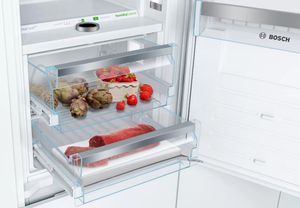
Bosch® 800 Series 22” 8.3 Cu. Ft. Panel Ready Built-In Bottom Freezer Refrigerator
Shop Bottom Freezer Refrigerators
Small openings are where most premium lineups give up, and this 22-inch unit is the exception. With 8.3 cubic feet and panel ready construction, it fits a narrow bay in a butler’s pantry, an in-law unit, a pool house, or a second prep zone at the far end of a long kitchen. It is also the natural partner for the column strategy discussed earlier, adding refrigeration exactly where the work happens instead of sending someone across the room. The bottom freezer keeps a small amount of frozen storage available without giving up fresh food space.
Top Features
- 22-inch narrow width: Fits bays and zones where a standard 30 or 36-inch unit cannot go.
- Panel ready construction: Disappears into surrounding cabinetry in a pantry, bar, or secondary space.
- 8.3 cubic feet with a bottom freezer: Compact fresh food storage plus a small freezer drawer in one unit.
- Zoned refrigeration: Places cold storage at a prep sink, bar, or guest suite rather than at the main box.
JennAir® 42” 24.2 Cu. Ft. Panel Ready Built-In French Door Refrigerator

Shop French Door Refrigerators
Forty-two inches is the sweet spot between a 36-inch built-in and a 48-inch statement piece, and this JennAir uses it well with 24.2 cubic feet behind a panel ready front. French doors on a 42-inch box mean each door swings less than a single wide door would, which keeps the aisle clear in a kitchen with an island close by. The panel ready front puts it in the fully integrated camp, so it belongs in a remodel where cabinetry and appliance are being specified together. A strong pick for a household that wants more capacity than 36 inches allows without redesigning around a 48-inch opening.
Top Features
- 42-inch built-in width: More capacity than a 36-inch unit while asking less of the cabinet plan than a 48-inch model.
- 24.2 cubic feet of capacity: Comfortable for a family that entertains without stepping up to the largest format.
- Panel ready front: Ready for custom panels so the refrigerator matches the cabinetry exactly.
- French door configuration: Controlled door swing on a wide box, which protects walkways next to an island.
Finding the Right High End Refrigerators for Your Home
What separates this category from mainstream refrigeration is precision cooling, real materials, genuine cabinetry integration, and support that lasts as long as the appliance. Choose the installation format first, because it constrains everything after it, then match preservation features to how your household actually shops and cooks rather than to a feature grid. The right high end refrigerators are the ones that fit your opening, your cabinets, and your week.
Come see them side by side. Shop high end refrigerators online at Direct Appliance or visit our showroom to compare formats, finishes, and drawer hardware in person before you commit. Our team reads spec sheets for a living, coordinates panel and handle details with your designer or cabinetmaker, confirms the opening before the order is placed, and handles professional installation and service locally after the sale. That is a different experience from a warehouse shipment and a call center, and on an appliance you will own for two decades, it is the part that matters most.
Frequently Asked Questions about High End Refrigerators
High end refrigerators are worth the extra cost when you need precise temperature and humidity control, true cabinetry integration, or a service life measured in fifteen to twenty years rather than ten. If you only need reliable cold storage in a standard opening and cabinetry integration is not a goal, a premium mainstream model will serve you well for less money.
A built-in refrigerator sits flush with a 24-inch cabinet run and vents through a top grille, but its front is still a visible appliance door in stainless or another finish. A fully integrated unit goes further by accepting custom cabinet panels on rated hinges, so the refrigerator reads as cabinetry and the top grille is concealed as well.
Premium built-in refrigerators are generally built and supported on a fifteen to twenty year horizon, compared with roughly ten to thirteen years for a mainstream unit. Longer sealed system warranty coverage, published parts availability, and factory-authorized technicians are what make repairs practical late in that span rather than pushing you toward replacement.
Built-in refrigerators are commonly available in 30, 36, 42, and 48-inch widths, and each model publishes an exact required cutout width, height, and depth that you should follow rather than rounding. Most also require 80 to 84 inches of height, clear top venting, a dedicated circuit, a water line, and anti-tip hardware secured to framing.
A column refrigerator is a single-purpose unit, either all refrigerator or all freezer, typically 18 to 36 inches wide, that is combined with other columns to fill a designed opening. It suits large kitchens, zoned layouts where refrigeration belongs near the prep sink and freezing near the pantry, and households that want to weight capacity heavily toward fresh food or toward frozen storage.
Individual repairs generally cost more because parts are specialized and factory-authorized labor rates are higher than general appliance rates. Routine maintenance is inexpensive by comparison, since it consists mainly of condenser cleaning, water and air filter replacement, and gasket inspection, and staying current with it is what keeps larger repairs rare.
Shop High-end Refrigerators at Direct Appliance
Visit one of our two appliance showrooms to experience the benefits of buying locally with the help of our knowledgeable staff. You can also shop for appliances online! Our friendly experts are always ready to assist you in finding the best appliance in Modesto and Jamestown, CA. Whether you call us at 209-238-3000, use our online chat feature, or come by in person, we're here to help!