Standing in front of a wall of glowing screens, all playing the same demo reel, the model names blur into alphabet soup: OLED, QLED, Neo QLED, QD-OLED, C5, Q6F. LG and Samsung each promise the best picture, the marketing stickers contradict each other, and none of it tells you which television will actually look better in your own living room with your own lighting. That paralysis is exactly where most TV shoppers get stuck when weighing LG vs Samsung TV options.
Compare LG and Samsung TVs at Direct Appliance
See LG OLED and Samsung QLED side by side in our showroom and find the right TV for your room. Expert guidance, professional setup, and local service.
Explore LG vs Samsung TVAt Direct Appliance, we cut through the marketing and help you match a TV to your room and how you use it. This guide compares LG and Samsung on the things that matter: picture quality, gaming, smart software, and value. Instead of declaring one brand the universal winner, it gives you a clear framework based on your space and priorities, so you walk into the showroom knowing what to look for.
Key Takeaways
- Room decides the winner: In the LG vs Samsung TV debate, LG OLED excels in dark rooms while Samsung QLED shines in bright ones.
- Both are great for gaming: LG OLED offers low input lag and fast response; Samsung delivers high brightness and strong game modes.
- Software differs on support: LG uses webOS and Samsung uses Tizen, with Samsung committing to longer OS update timelines on select models.
- Value spans tiers: Samsung offers strong value across QLED tiers, while LG OLED sits at a premium for its panel technology.
LG vs Samsung TV: Picture Quality Compared
Picture quality is where the LG vs Samsung TV comparison really begins, and the honest answer is that the best brand depends on your room. The two use different panel technologies that each excel in different lighting conditions.
LG built its reputation on OLED. Because each OLED pixel produces its own light and switches completely off for true black, LG models deliver exceptional contrast and deep, inky blacks. In a dark room or a dedicated home theater, that contrast makes movies look stunning, with shadow detail no backlit TV can match.
Samsung counters with QLED and Neo QLED, which use powerful backlighting behind a Quantum Dot layer to achieve very high peak brightness, often exceeding 2,000 nits on flagship models. That brightness cuts through glare and sunlight, so in a bright living room with big windows, a Samsung QLED stays vivid and punchy where a dimmer TV would wash out. Samsung's color volume also holds up well at those high brightness levels. Newer QD-OLED technology blends OLED contrast with Quantum Dot color for another premium option.
Here is the insight that matters more than brand loyalty: the ambient lighting in your actual room affects perceived picture quality more than the badge on the TV. A gorgeous OLED can look underwhelming in a sun-drenched room, and a bright QLED can look less cinematic in a blacked-out theater. Match the panel to your lighting, dark room favors LG OLED, bright room favors Samsung QLED, and you will be happy regardless of which name is on the set.
Gaming Performance: LG and Samsung TVs Side by Side
Gamers have strong opinions, but the reassuring truth is that both LG and Samsung make excellent gaming televisions. The meaningful difference comes down to panel type rather than one brand being universally superior.
LG OLED models are beloved by gamers for a few reasons:
- Low input lag: OLED panels respond almost instantly, so button presses register with minimal delay.
- Fast response times: Pixels change state nearly instantly, eliminating motion blur in fast-moving scenes.
- Perfect contrast in dark games: True blacks reveal detail in shadowy horror and atmospheric titles.
Samsung brings its own gaming strengths to the table:
- High refresh rates: Strong support for high refresh rates keeps fast action smooth.
- Bright HDR gaming: High peak brightness makes HDR games pop with vivid highlights.
- Game mode optimization: Well-tuned game modes for consoles and PCs reduce lag and add gaming dashboards.
Both brands widely support the features competitive gamers want, including HDMI 2.1 and variable refresh rate (VRR), which syncs the TV to your console or PC to prevent screen tearing.
So which do gamers tend to prefer? Those who play in darker rooms and value contrast and instant response often lean LG OLED, while those in brighter rooms who want maximum brightness and smooth high-refresh play may favor Samsung. Neither choice is a mistake. Decide based on your room and the games you love, the same way you would for movies.
Smart TV Software: webOS vs Tizen
Every modern TV is a smart TV, and the software you interact with daily differs between the two brands. LG runs webOS while Samsung runs Tizen, and both offer large libraries of streaming apps covering all the major services. On day-to-day usability, they are more similar than different, with clean interfaces and quick access to your favorite apps.
Where a real distinction emerges is long-term software support. Samsung has committed to up to seven years of operating system updates on select models, while LG typically provides around three to five years depending on the model and region. That gap matters more than it first appears.
Long-term software support directly affects total cost of ownership. A television is a purchase you keep for many years, and an older smart TV that stops receiving updates can become sluggish, drop support for apps, or miss new streaming features. A longer update commitment means your TV stays fast, secure, and compatible with the latest apps further into the future, protecting your investment.
Both platforms include modern conveniences like voice assistant integration and companion phone apps that act as a remote and let you cast content. If you plan to keep your TV for the better part of a decade, Samsung's longer update window is a meaningful point in its favor. If you upgrade more frequently, the difference matters less, and LG's webOS remains a polished, enjoyable experience. Weigh how long you intend to keep the set when you factor software into the LG vs Samsung TV decision.
Price and Value: LG vs Samsung TV Lineups
Value is where many decisions ultimately land, and the two brands price their lineups differently. LG's OLED models tend to sit at a higher price point because OLED panel technology is expensive to produce, especially at larger sizes and flagship tiers like the G-series. You pay a premium for that reference-grade contrast.
Samsung offers strong value across a wider range of QLED tiers. From accessible entry-level QLED sets to premium Neo QLED and QD-OLED flagships, Samsung's broad lineup means there is a Samsung option at nearly every budget, often undercutting comparable OLED pricing at the mid-range.
The key to getting value is to map your budget to realistic expectations rather than comparing brands as monoliths:
- Entry budget: A Samsung entry QLED delivers bright, colorful images at an affordable price, a strong value pick.
- Mid-range: Step-up Samsung QLED or Neo QLED models add better contrast control, while LG's more accessible OLED models become an option.
- Premium: Flagship LG OLED and Samsung Neo QLED or QD-OLED sets compete at the top for the best picture money can buy.
Total value also includes what happens after the sale. Extended warranty coverage and in-home service availability protect your investment, and that is an area where buying from a local retailer adds real value over a big-box transaction. When you factor in support alongside the sticker price, the best-value choice becomes clearer, and it sets up the side-by-side comparison and models below.
Choosing the Right TV Size and Viewing Distance
Before you settle on a brand, getting the screen size right for your room is just as important as picture technology, because even the best panel disappoints if the TV is too small to immerse you or so large it strains your eyes. Size and viewing distance work together, and matching them to your space makes sure you actually enjoy the picture quality you paid for.
A few practical guidelines help you choose the right size:
- Measure your viewing distance: Note how far your seating sits from where the TV will go, since that distance determines the ideal screen size.
- Match size to distance: As a general rule, a comfortable 4K viewing distance is roughly one to one and a half times the screen's diagonal, so a 65-inch TV suits a seating distance of around six to eight feet.
- Go larger for 4K and 8K: Because high-resolution panels look sharp even up close, you can sit nearer to a big screen without seeing pixels, making a larger TV a safe, immersive choice.
- Consider mounting height: Position the center of the screen near eye level from your seated position for the most comfortable long-term viewing.
Both LG and Samsung offer their panel technologies across a wide range of sizes, from compact sets for bedrooms and kitchens to massive screens for great rooms and home theaters. That means you can choose the brand and panel that fit your room's lighting, then select the size that fits your space and seating.
Getting size and distance right amplifies everything else about the TV. A properly sized LG OLED in a dark theater or a large Samsung QLED in a bright great room delivers a genuinely immersive experience, while a mismatched size undercuts even the finest panel. Our showroom team can help you calculate the ideal size for your viewing distance so your new television feels just right the moment you turn it on.
LG vs Samsung TV Comparison Table
Seeing the two brands side by side clarifies which fits your room and priorities. The table below compares them on the factors that drive the decision.
| Factor | LG | Samsung |
|---|---|---|
| Panel technology | OLED, QD-OLED | QLED, Neo QLED, QD-OLED |
| Best viewing environment | Dark rooms and home theaters | Bright, sunlit rooms |
| Peak brightness | Excellent contrast, lower peak brightness | Very high peak brightness |
| Gaming features | Low input lag, fast response | High refresh, strong game modes |
| Smart TV OS | webOS | Tizen |
| Software support lifespan | Around 3 to 5 years | Up to 7 years on select models |
Read more:
LG vs Samsung TV Advantages and Disadvantages
Choosing between LG and Samsung comes down to your viewing environment and priorities, like contrast versus brightness, rather than one brand being objectively superior. Here is the balanced view.
Pros
LG deep blacks and contrast
OLED delivers unmatched black levels for home theaters and dark-room movie watching.
Samsung high brightness
QLED and Neo QLED stay vivid and glare-resistant in bright, sunlit rooms.
Strong gaming on both
Each brand offers low lag or high refresh rates, HDMI 2.1, and VRR for great gaming.
Wide model range
Both brands span budget to flagship, so there is a fit at nearly every price point.
Cons
LG OLED premium pricing
Top-tier LG OLED panels carry a higher price for their contrast performance.
Entry QLED contrast limits
Samsung's least expensive QLED models may lack the deep contrast serious movie viewers want.
Read more:
Featured LG and Samsung TVs Worth a Closer Look
This is the only section where we recommend specific models. The lineup below balances both brands across room types and uses, from home theater to bright living rooms to gaming, so you can compare them directly. Our showroom team can show you any of these running side by side.
LG C5 Series 65" 4K Ultra HD OLED evo AI Smart TV
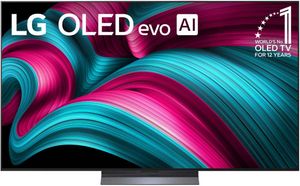
This LG C5 OLED is the sweet spot for home theater lovers, delivering the perfect blacks and infinite contrast OLED is famous for in a popular 65-inch size. The evo panel adds brightness over older OLEDs, and low input lag makes it a favorite for gaming in darker rooms. webOS keeps streaming smooth and simple. For a movie enthusiast or gamer who watches in a light-controlled room and wants reference-grade contrast, this LG OLED is an outstanding choice that showcases exactly why OLED remains the gold standard for cinematic viewing.
Top Features
- Panel type: 4K OLED evo with self-lit pixels.
- Screen size: 65 inches.
- Refresh and gaming: Low input lag, gaming-friendly.
- Smart platform: LG webOS with AI features.
LG MRGB95B Series 75" 4K Ultra HD Micro RGB evo AI Smart TV
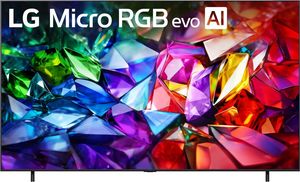
This LG Micro RGB model brings advanced color technology to a large 75-inch screen, blending vivid, precise color with strong brightness for a bright-room-friendly LG option. The big screen makes it ideal for a great room or large living space where impact matters, and the evo AI processing sharpens everyday content. webOS rounds out the smart experience. For a household that wants a large, colorful, bright LG television that performs well even in well-lit rooms, this Micro RGB set offers a compelling blend of size, color, and brightness.
Top Features
- Panel type: 4K Micro RGB evo panel.
- Screen size: 75 inches.
- Refresh and gaming: Smooth AI-enhanced performance.
- Smart platform: LG webOS with AI features.
LG 24" HD LED Smart TV Monitor with webOS 24LQ520S-PU
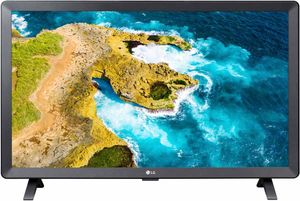
This compact 24-inch LG doubles as a smart TV and a monitor, perfect for a bedroom, kitchen, dorm, or office. It runs full webOS for streaming apps in a small footprint, and the LED panel delivers clear HD picture for casual viewing or as a secondary screen. Its versatility makes it a practical pick where a large TV would not fit. For anyone who needs a small, affordable smart display with streaming built in, this LG set is a handy, space-saving solution that brings smart features to compact spaces.
Top Features
- Panel type: HD LED display.
- Screen size: 24 inches.
- Refresh and gaming: Suited to casual viewing.
- Smart platform: LG webOS with monitor use.
Samsung Q6F 55" 4K Ultra HD QLED Smart TV
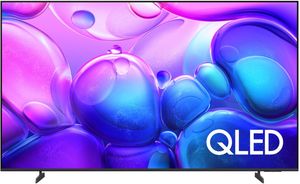
This Samsung Q6F QLED is a strong value pick in a versatile 55-inch size, bringing Quantum Dot color and bright, vivid images well suited to everyday living rooms. QLED brightness helps it stay punchy even in rooms with some ambient light, and Tizen delivers a full slate of streaming apps. For a household that wants colorful, bright 4K performance at an accessible price for a bright or mixed-lighting room, this Samsung QLED is an excellent, budget-conscious choice that captures the brand's brightness advantage without a flagship price.
Top Features
- Panel type: 4K QLED Quantum Dot.
- Screen size: 55 inches.
- Refresh and gaming: Game mode support.
- Smart platform: Samsung Tizen.
Samsung DU9000 98" 4K Ultra HD LED Smart TV UN98DU9000FXZA
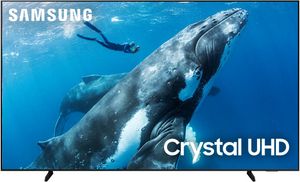
This enormous 98-inch Samsung is built for buyers who want maximum screen size and bright, big-picture impact in a great room or media space. The huge 4K LED panel fills the wall and makes sports and movies feel larger than life, while Tizen keeps streaming easy. Its brightness suits large, well-lit spaces where a massive screen is the centerpiece. For a household chasing the biggest possible screen with vivid, bright imagery for entertaining and events, this Samsung set delivers commanding scale that transforms a room into a theater.
Top Features
- Panel type: 4K LED with Quantum processing.
- Screen size: 98 inches.
- Refresh and gaming: Game mode for large-screen play.
- Smart platform: Samsung Tizen.
LG vs Samsung TV: Making the Final Call
In the LG vs Samsung TV decision, LG OLED wins for dark-room contrast and cinematic viewing, Samsung QLED wins for bright-room brightness, both excel at gaming, and Samsung leads on long-term software support while offering strong value across tiers. The right choice comes down to your room's lighting and how you use the TV, not one brand being universally better.
The best way to decide is to see them side by side, so visit Direct Appliance. As an independent local retailer, we offer expert showroom guidance, professional delivery and setup, and personalized local customer service that big-box competitors cannot match. Stop by and compare LG and Samsung TVs in person before you decide.
Read more:
- 4 Benefits of Visiting Our Sub-Zero Wolf Showroom
- What to Know Before Installing a Home Theater System
- How to Choose a Good Home Stereo System
Frequently Asked Questions About LG vs Samsung TV
LG is better for picture quality in dark rooms thanks to OLED's perfect blacks and contrast, while Samsung is better in bright rooms with its high-brightness QLED panels. The best choice depends on your room's lighting.
Both LG and Samsung are excellent for gaming, with LG OLED offering low input lag and fast response and Samsung offering high refresh rates and bright HDR. The difference comes down to panel type and your room.
OLED TVs use self-lit pixels that switch off for perfect blacks and contrast, while QLED TVs use backlighting with Quantum Dots for higher brightness. OLED excels in dark rooms; QLED excels in bright rooms.
Samsung has committed to up to seven years of OS updates on select models, while LG typically offers around three to five years. Longer support keeps a smart TV fast and app-compatible for more years.
Samsung is generally better for a bright living room because its QLED and Neo QLED panels reach very high peak brightness that resists glare. LG OLED can look dimmer in rooms with lots of sunlight.
Samsung is often more affordable for the same screen size, offering strong value across its QLED tiers. LG OLED models tend to cost more due to the premium panel technology they use.
Shop LG and Samsung TVs at Direct Appliance
Visit one of our two appliance showrooms to experience the benefits of buying locally with the help of our knowledgeable staff. You can also shop for appliances online! Our friendly experts are always ready to assist you in finding the best appliance in Modesto and Jamestown, CA. Whether you call us at 209-238-3000, use our online chat feature, or come by in person, we're here to help!