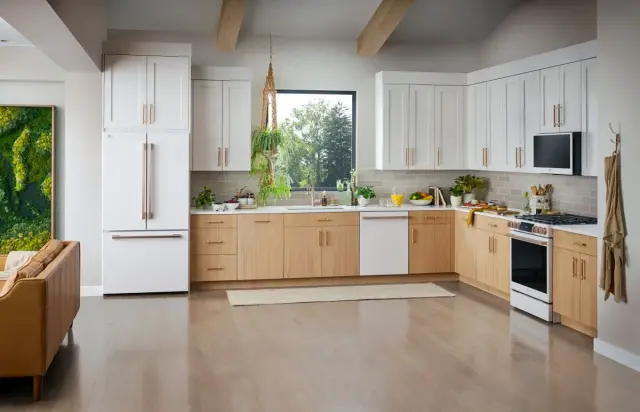
The cabinet order goes to the shop tomorrow morning, and the designer needs one answer before it does. Panel-ready column refrigeration changes the cabinet run, the filler widths, and the panel budget. A standard built-in does not. Meanwhile the plan taped to the plywood says 48-inch range, the framer already blocked the ceiling for a hood that has not been picked, and the tile order is riding on both numbers. That is the moment most homeowners realize luxury kitchen appliances are a construction decision as much as a shopping decision, and it tends to arrive about two weeks later than it should.
See Luxury Kitchen Appliances Side by Side in Modesto
Our team compares pro ranges, built-in refrigeration, wall ovens, and ventilation against your actual kitchen plan, then handles delivery, professional installation, and service after the sale. Shop the full lineup in one place.
Explore luxury kitchen appliancesThe good news is that every one of those decisions has a right answer, and it is knowable before the drywall goes up. Direct Appliance has been helping Modesto and Central Valley homeowners sequence these choices for years, and the pattern is always the same. What follows is what actually separates a luxury appliance from a nice-looking one, how the major brands sort into tiers, how to choose refrigeration and a cooking core, what ventilation and electrical work these machines demand, and how to plan a full suite without paying for features you will never touch.
Key Takeaways
- Luxury is measurable, not marketing: Heavier steel, dual compressors, sealed brass burners, full-extension ball-bearing racks, and published parts diagrams are the physical traits that separate tiers.
- Brand choice should follow cooking style: Sub-Zero and Wolf, Thermador, Miele, JennAir, Viking, and Café each lead in different areas, so match the platform to how you cook rather than to a logo.
- Ventilation and electrical are the budget traps: A professional range needs matching hood capacity, correct duct sizing, and dedicated circuits, and that work has to be planned before delivery day.
- Serviceability decides the fifteen-year outcome: Local factory-authorized service and reasonable parts lead times matter more than a warranty length printed on a box.
What Defines Luxury Kitchen Appliances: Build, Materials, and Performance
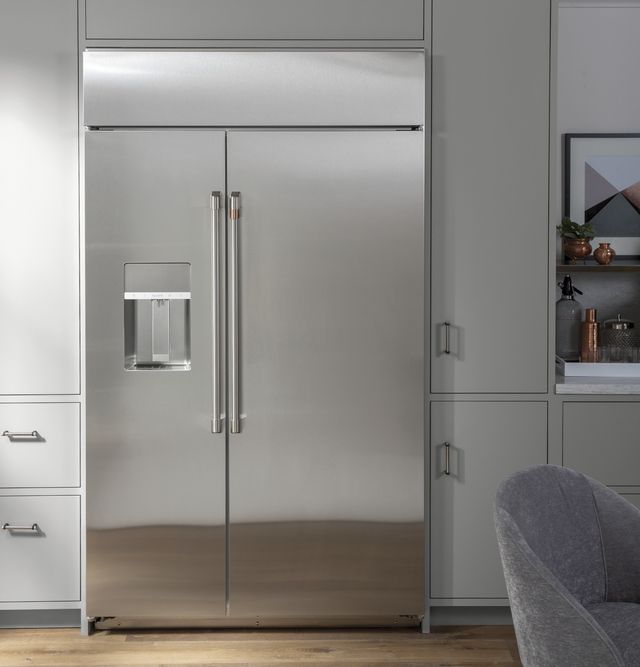
A luxury kitchen appliance is one built with heavier materials, tighter tolerances, and serviceable components, so it holds precise temperatures, runs quietly, and stays in the kitchen for fifteen to twenty years instead of seven. That is the whole definition. Everything else is packaging.
Walk the physical differences and they stack up fast. Heavier gauge stainless steel resists denting and keeps door panels flat over time. Full-extension ball-bearing racks and drawer glides carry a loaded roasting pan without sagging or sticking. Refrigeration moves to dual compressors and dual evaporators so the fresh food and freezer sections stop sharing air. Cooking surfaces use sealed brass or heavy cast burners with a genuinely wide usable range, true convection with multiple elements, cast hinges, soft-close doors, and metal knobs with machined detents you can feel through a towel.
Once people live with these machines, three attributes get mentioned more than any others. Precision at low heat comes first, because holding a real simmer under a pan of sauce is a daily task that a builder-grade burner fails at. Quietness comes second, measured in decibels and felt most in open-plan rooms. Food preservation comes third, and it is the reason independently controlled fresh and freezer compartments justify their cost.
The Vocabulary Your Designer Will Use
Contractors and kitchen designers speak in shorthand. Knowing it lets you push back with confidence instead of nodding along.
- Panel-ready: the appliance accepts a custom cabinet panel on the door so it reads as furniture.
- Fully integrated: panel-ready plus hidden hinges, hidden vents, and controls inside the cabinet.
- Flush inset: the appliance face sits level with the surrounding cabinet fronts with no projection.
- Framed and frameless: describes the cabinet construction the appliance has to align with.
- Professional or pro style: heavy commercial-inspired styling with thick handles, knobs, and high output.
- Counter-depth: a shallower box that sits close to flush with a standard countertop run.
- Column: a single-purpose refrigerator or freezer unit, sized in individual widths.
- Built-in versus freestanding: built-in units are trimmed into cabinetry and are not designed to stand alone.
Here is the part competing guides skip. Build quality shows up most clearly in serviceability. Premium platforms are assembled from replaceable modules with published parts diagrams and long parts support windows, which means a failed control board or a worn hinge is a repair rather than a replacement. Mass-market appliances increasingly bond components into assemblies that cannot be separated. That single engineering difference is why one machine reaches year eighteen and another gets hauled to the curb at year seven.
Read more:
Luxury Appliance Brands Explained: Tiers, Strengths, and Who Each One Suits
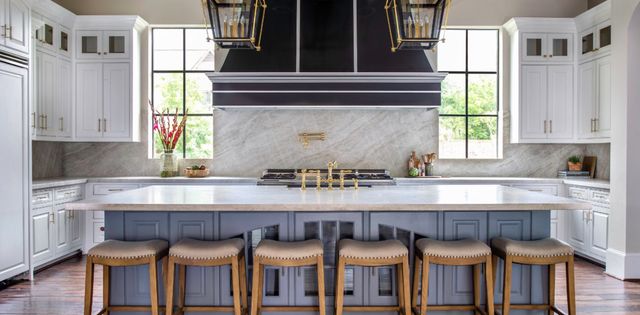
High-end kitchen appliances sort into three tiers, and placing your budget inside one of them narrows the field faster than any feature comparison.
Accessible Premium
This tier buys integrated looks, strong dishwashers, and design flexibility at a lower entry point. Café leads on customization, with swappable hardware finishes and color options that let a kitchen look designed rather than ordered. Bosch Benchmark leads on quiet dishwashing and flush-fitting wall ovens that align cleanly with cabinet faces. Fisher & Paykel brings modular thinking, especially drawer dishwashers and integrated refrigeration in tighter footprints.
- Café, best for a design-forward kitchen where finish and hardware choices matter as much as output.
- Bosch Benchmark, best for quiet-first households and clean built-in oven lines.
- Fisher & Paykel, best for smaller kitchens and split, modular layouts.
Core Luxury
This is where most Central Valley remodels land, and where the brand names get familiar. Sub-Zero owns refrigeration and food preservation. Wolf owns cooking control, especially dual fuel ranges. Thermador delivers full-suite value and strong induction cooktops. Monogram makes statement pieces including hearth ovens. JennAir goes bold and contemporary on styling. Miele leads on steam ovens and dishwashers. Dacor pushes connected features and flexible configurations. Viking offers deep color programs and classic pro-style ranges.
- Sub-Zero, best for households that shop fresh weekly and hate throwing produce away.
- Wolf, best for high-heat searing paired with a stable, even oven.
- Thermador, best for outfitting an entire kitchen on one platform with one service contact.
- Monogram, best for a kitchen built around a visual centerpiece.
- JennAir, best for contemporary design where the range is the focal point of the room.
- Miele, best for low-and-slow baking, steam cooking, and near-silent dishwashing.
- Dacor, best for connected homes that want app control across the suite.
- Viking, best for color-matched pro ranges and batch entertaining.
Ultra Luxury
La Cornue sits at the top, hand-building ranges with custom color and trim programs. Buyers choose this tier for craftsmanship and for a piece nobody else in town has, not for a spec sheet win. Plan on lead times measured in months and a design conversation that starts long before the cabinet order.
Two practical notes on luxury appliance brands. Several of them share parent companies, which explains overlapping features, shared parts platforms, and combined service networks. And suite discounts almost always apply within a single brand family, so mixing four premium logos usually costs more than committing to one.
Luxury Kitchen Appliance Brand Comparison Chart
Read this chart across the row that matches your budget, then check the Best For column against how you actually cook during a normal week.
| Brand | Tier | Known For | Signature Category | Panel-Ready or Integrated Options | Typical Suite Investment | Standard Warranty | Best For |
|---|---|---|---|---|---|---|---|
| Sub-Zero | Core luxury | Preservation and dual refrigeration systems | Built-in and column refrigeration | Panel-ready and fully integrated | Core luxury band | Confirm current terms by model | Fresh-produce households |
| Wolf | Core luxury | Cooking control and burner range | Dual fuel ranges and rangetops | Not applicable to cooking | Core luxury band | Confirm current terms by model | High-heat searing |
| Thermador | Core luxury | Full-suite value and induction | Wall ovens and cooktops | Panel-ready refrigeration | Core luxury band | Confirm current terms by model | One-platform kitchens |
| Monogram | Core luxury | Statement design and hearth ovens | Pro ranges and specialty ovens | Panel-ready refrigeration | Core luxury band | Confirm current terms by model | Centerpiece kitchens |
| JennAir | Core luxury | Bold contemporary styling | Pro style ranges and refrigeration | Panel-ready refrigeration | Core luxury band | Confirm current terms by model | Design-led remodels |
| Miele | Core luxury | Steam cooking and quiet dishwashing | Steam ovens and dishwashers | Fully integrated options | Core luxury band | Confirm current terms by model | Baking and steam cooking |
| Café | Accessible premium | Hardware and finish customization | Ranges and built-in refrigeration | Select panel-ready models | Accessible premium band | Confirm current terms by model | Personalized finishes |
| Bosch Benchmark | Accessible premium | Quiet dishwashers and flush ovens | Dishwashers and wall ovens | Panel-ready dishwashers | Accessible premium band | Confirm current terms by model | Quiet open-plan kitchens |
| Fisher & Paykel | Accessible premium | Modular and drawer formats | Drawer dishwashers and integrated cooling | Integrated and panel-ready | Accessible premium band | Confirm current terms by model | Compact and split layouts |
| Dacor | Core luxury | Connected features and configurability | Ranges and refrigeration | Panel-ready refrigeration | Core luxury band | Confirm current terms by model | Smart-home kitchens |
| Viking | Core luxury | Color programs and pro styling | Pro style ranges and hoods | Panel-ready refrigeration | Core luxury band | Confirm current terms by model | Color-matched pro ranges |
| La Cornue | Ultra luxury | Hand-built custom ranges | Custom ranges | Custom by project | Ultra luxury band, quoted per project | Confirm current terms by model | Craftsmanship-first buyers |
Fuel type shapes the cooking experience even more than the badge on the door, so run this second table before you commit to a range.
| Range Type | Heat Response | Best Cooking Strengths | Ventilation Demand | Considerations |
|---|---|---|---|---|
| Gas | Instant up and down at the flame | Searing, charring, wok work, visual control | Highest, especially at pro output | Needs correctly sized gas supply |
| Dual fuel | Instant on top, steady in the oven | Searing plus even, controlled baking | High, driven by the burner side | Needs both gas and a dedicated electrical circuit |
| Induction | Fastest response of any surface | Fast boil, precise low simmer, cool kitchen | Lowest of the four | Requires magnetic cookware and heavy electrical service |
| Electric | Slower to change temperature | Steady radiant heat and simple cleanup | Moderate | Element response lags behind gas and induction |
Suite investment above is expressed as a tier band rather than a price, because configuration, finish, and current promotions move the number constantly. Warranty terms also vary by category and by model year. Our team can pull live pricing, current package offers, and the exact warranty document for any row in this chart at the Modesto showroom.
Luxury Refrigeration: Columns, Panel-Ready Design, and Fully Integrated Looks
Refrigeration is the piece that decides your cabinet order, so it should be chosen first. There are four formats worth understanding, and they differ mainly in depth and in how much cabinetry has to be built around them.
Counter-depth built-in models sit close to flush with a standard countertop run and give the cleanest look for the least construction. Professional or pro-style built-ins go further, with thicker doors, heavy handles, and a trim kit that ties the unit into the cabinet run. Fully integrated units hide hinges, vents, and controls so the appliance disappears entirely behind custom panels. Column refrigeration splits the job into separate refrigerator and freezer units, each in its own opening.
Why Columns Keep Winning
Column refrigeration is the fastest-growing choice in high-end kitchens for a practical reason. Because columns come in individual widths, generally from eighteen to thirty-six inches, you can size cold storage to the actual wall you have instead of accepting a manufacturer’s fixed pairing. You can also split them, putting a refrigerator column in the main kitchen and a freezer or a wine column in the butler’s pantry.
The trade-off is honest. Two columns cost more per cubic foot than a single unit of the same total volume, and each one needs its own opening, its own panel, and its own electrical. Buyers accept that because the layout freedom and the preservation performance are worth it to them.
Panel-ready deserves a clear explanation because it is where budgets slip. The appliance ships without a finished front. Your cabinetmaker builds and finishes the panel, your cabinet order pays for it, and the handle is usually a separate allowance on top. Panel weight limits and hinge specifications are published by the manufacturer, and they have to be handed to the cabinet shop before fabrication starts. A panel that is too heavy will sag the hinge no matter how well it is installed.
Preservation, not capacity, is why most buyers upgrade. Dual compressors and dual evaporators keep freezer air out of the fresh food section, which is why lettuce stays crisp and ice cream does not pick up flavors. Air purification systems reduce the ethylene gas that ripens produce prematurely. Humidity-controlled drawers hold separate environments for greens and for hard produce.
Secondary refrigeration is a planning topic, not an afterthought. Undercounter refrigerator drawers work well in an island so kids can reach drinks without crossing the cooking zone. Beverage centers belong at a bar or coffee station. Wine columns with dual temperature zones store reds and whites correctly and are best placed away from the range, where ambient heat and vibration are lowest.
Measure before anything is ordered. You need rough opening width, height, and depth, plus clearance for door swing against adjacent walls and island corners, plus the grille airflow clearance the manufacturer requires at the top or the base. Flush installations leave almost no margin for error, which is exactly why they look so good when they are done right.
Pro Ranges, Cooktops, and Wall Ovens: Choosing Your Cooking Core
The cooking core is either one appliance or three, and the choice is mostly about layout. A range plus a hood keeps everything in one place, costs less to install, and works beautifully when the cooking wall is the focal point of the room. A separate cooktop with double wall ovens makes more sense when two people cook at once, when you want the ovens at eye level, or when the island is the cooking surface and the ovens live in a tall cabinet run somewhere else.
Fuel and Surface
Gas gives visible flame control and works with every pan you own. Dual fuel pairs gas burners on top with an electric oven below, which is the combination serious bakers ask for because electric heat holds a steadier, more even oven temperature than gas does. Induction is the fastest and most precise surface available and keeps the kitchen cooler, but it needs magnetic cookware. Electric is the simplest to install and the slowest to respond.
A few surface details matter more than the headline output number. Sealed burners contain spills on the surface instead of letting them drain underneath, which makes cleanup a wipe rather than a project. Open burners breathe better and are traditional on some pro platforms, but they ask more of you at cleaning time. On induction, boost concentrates power into a single element for fast boil, and bridge zones link two elements into one long surface for a griddle or fish pan. Confirm usable output ranges on the spec sheet, since the top and bottom of the range both matter.
Width Drives Everything Downstream
Professional ranges come in thirty, thirty-six, forty-eight, and sixty-inch widths, and the wider models add modules: a griddle for breakfast volume, a grill for indoor searing, or a French top for holding multiple pots at graduated temperatures. Width is not just a cooking decision. It sets the cabinet layout, the countertop cuts, the hood width, and the required hood capacity all at once. Going from thirty-six to forty-eight inches changes four line items on the quote, not one.
Wall ovens have their own feature list worth reading closely. True convection adds a third heating element around the fan for even multi-rack baking. Temperature probes take the guesswork out of roasts. Steam-assist adds moisture for bread and lean proteins, while full steam ovens cook with steam alone. Speed ovens combine convection with microwave power in one cavity. Self-clean methods vary between high-heat pyrolytic cycles and lower-temperature steam cleaning. And side-swing doors are far easier to work around than drop-down doors for anyone who does not want to lean over a hot door to reach the rack.
Then come the constraints buyers usually discover late. Gas lines have to be sized for the total output of the appliance, and an existing line that fed a builder-grade range is often undersized for a professional one. Induction cooktops and electric wall ovens need dedicated 240-volt circuits with correctly sized breakers. High-output ranges can require floor reinforcement under the weight and heat protection on the wall behind them. All of that is infrastructure work, and it belongs on the schedule before the delivery truck is booked.
One more piece of guidance the internet rarely gives. Match the cooking core to your real weekly habits, not to your best holiday. If you have never steamed anything, a full steam oven will sit unused. If you bake twice a week, put the money into oven quality and convection instead of a fifth burner.
The honest way to evaluate this category is as a long-term ownership cost rather than a one-time purchase. Spread over fifteen to twenty years of daily use, the math looks very different than it does on the invoice. Here is the balanced view.
Pros
Cooking precision you can repeat
Heavy burners, true convection, and accurate thermostats produce the same result every time, which turns a good recipe into a reliable one.
Better preservation and less waste
Independent cooling systems and humidity control keep produce, dairy, and proteins usable longer, which quietly offsets part of the cost every week.
Service life and real repairability
Modular construction and published parts diagrams mean components get replaced instead of whole appliances, and fifteen to twenty years of service is a realistic target.
Design integration with cabinetry
Panel-ready and fully integrated formats let refrigeration and dishwashers disappear into the cabinet run for a finished, built-in look.
Resale appeal in higher-value homes
Recognized premium brands read as a completed kitchen to buyers and appraisers in the Central Valley market.
Cons
Higher upfront and installation cost
The appliance is only part of the number, since ventilation, custom panels, gas sizing, and electrical work all add to the project total.
Lead times and certified service
Some configurations are built to order and take months, and repairs should go to factory-authorized technicians rather than any general appliance tech.
For a household that cooks most nights, plans to stay in the home, and is remodeling anyway, this category earns its place. For a rarely used kitchen, the accessible premium tier delivers most of the visual payoff for far less.
Read more:
Ventilation, Electrical, and Installation Requirements for High-End Kitchens
Ventilation is the most under-budgeted line in a luxury kitchen, and it is the one that gets noticed first when it is wrong. Start with capacity. As a general planning guide, a thirty-inch standard range is usually served by roughly four hundred to six hundred CFM. A thirty-six to forty-eight-inch professional range typically calls for twelve hundred to fifteen hundred CFM. Induction cooking needs less, generally in the three hundred fifty to four hundred fifty CFM range. Treat those as starting points and confirm the manufacturer spec sheet and the local code requirement before ordering.
Sizing and Duct Work
Capacity is only half the job. The hood should be at least as wide as the cooking surface, and wider is better on an island where cross-drafts pull smoke sideways. Capture depth of at least twenty-three inches keeps the plume under the canopy instead of rolling around it. Mounting height follows the manufacturer’s published range, since hanging a hood too high drops real-world capture dramatically. Duct diameter has to match the blower rating, and the run should be as short and as straight as the framing allows.
Here is the number our installers work from on every hood job. Each ninety-degree elbow in a duct run adds roughly the same airflow resistance as ten to fifteen feet of straight pipe, so a hood with a short, direct run will outperform a higher-rated hood pushed through three turns and a long attic path every single time. Plan the duct route before you shop the CFM rating.
Make-up air is the requirement people learn about at inspection. When a hood pulls a large volume of air out of a tightly built house, that air has to be replaced from somewhere, or the house depressurizes and can backdraft a water heater or fireplace. Above a certain exhaust threshold, code requires a mechanical make-up air system that opens a damper and supplies replacement air when the hood runs. Thresholds and permitting rules apply here in Modesto and across the surrounding Central Valley, so confirm the requirement with your contractor early.
The rest of the behind-the-wall list is short but non-negotiable:
- Dedicated circuits with correctly sized breakers for induction, electric ovens, and pro range electronics
- Water lines for ice makers, plumbed coffee systems, and steam ovens
- Condensate drains where a steam oven or integrated unit requires one
- Gas conversion kits if the home runs on propane rather than natural gas
- Blocking and structural support for island hoods and heavy wall units
Delivery is its own project. A professional refrigerator is tall, heavy, and often too wide for a standard interior doorway, so measure the entire path including turns and stair landings. Cabinet cutouts need to hold tolerance, anti-tip hardware has to be installed, and the unit has to be leveled precisely or a flush door line will read crooked from across the room. Panel-ready and flush installations should be handled by crews who do them regularly, because the tolerances are unforgiving.
The simplest way to avoid all of it is sequencing. Finalize appliance selections before cabinetry is ordered, then bring the kitchen plan to the Direct Appliance showroom for a spec review against real cut sheets.
Budgeting, Warranties, and Service: Smart Buying Tips for Luxury Appliances
Build the budget in two parts, because the appliances are only the first one. Set your suite target by tier: accessible premium for integrated looks on a controlled budget, core luxury for the full performance jump, ultra luxury for hand-built pieces. Then add a second line for the work around them. Ventilation, custom panels, gas sizing, dedicated circuits, and professional installation routinely add a meaningful percentage on top of the appliance total, and projects that ignore that line are the ones that stall.
Sequence the purchase in this order:
- Refrigeration, because it sets the cabinet order and has the longest lead times.
- The cooking core, since range width drives hood width, capacity, and countertop cuts.
- Dishwasher and ventilation, which are sized around the first two decisions.
- Specialty pieces such as steam ovens, wine columns, and undercounter drawers.
Buying within one brand family usually earns the best rebates, which is a real argument for committing to a platform rather than assembling four logos. Timing helps too. Brands run suite savings events through the year, holiday windows bring the deepest package offers, and a local showroom occasionally has floor models or open-box units that never appear online at all.
Warranties and the Service Question
Warranty coverage in this category generally starts with a full first-year term, with longer parts coverage and extended sealed-system coverage on refrigeration from some manufacturers. Terms differ by brand, category, and model year, so read the actual warranty document rather than a summary. Extended service plans can be worthwhile on complex platforms, but confirm exactly what they cover, whether they include labor, and who performs the work.
Here is the guidance that matters more than any of it. Before you buy, ask whether there is a factory-authorized technician for that brand near you and what typical parts lead time looks like. A premium appliance with no certified service within reach is a long-term liability in the Central Valley, no matter how good the spec sheet reads. That is exactly why Direct Appliance keeps a Modesto showroom, delivery, professional installation, and local service under one roof instead of routing you to a national call center after the sale.
The Two-Week Kitchen Log That Picks Your Appliances For You
Before you commit to anything, keep a simple log for two weeks and write down five things each day: how many burners you actually had running at the same time, the diameter of the largest pan you used, whether the oven and the cooktop ran together, how many days passed between grocery runs, and how often you turned the vent hood past its lowest setting. It takes ten seconds a day and it removes almost all the guesswork from a six-figure decision, because it replaces how you imagine you cook with how you actually cook. Most people are surprised. The household that swore it needed a sixty-inch range discovers it never used more than three burners, and the one that planned on a single refrigerator learns it shops for eight people twice a week.
- Four or more burners running at once, or pans wider than twelve inches, points to a forty-eight-inch or wider professional range instead of a thirty-six.
- Oven and cooktop running together most nights argues for a separate cooktop and wall oven so two cooks are not sharing one appliance.
- Grocery runs more than five days apart, or a full second shelf of produce, points toward column refrigeration or a wide built-in rather than a standard box.
- Frequent high-heat searing or wok cooking raises your required hood capacity and makes duct routing the priority over the CFM number on the box.
- Hood use limited to the lowest setting suggests induction would suit the household better than a high-output gas range.
- Baking more than twice a week justifies spending on true convection and a dual fuel or electric oven cavity ahead of extra burners.
- Zero steam or specialty cooking in fourteen days means a steam oven belongs on the maybe list, not the must list.
Read more:
- Inside Direct Appliance's Sub-Zero Wolf Showroom in Modesto, CA
- Custom Kitchens: Why Hiring Local Designers Matters
Featured Luxury Kitchen Appliances Available at Direct Appliance
Everything above turns into actual hardware here. The lineup below covers five different categories and five different brands, chosen so you can see how a design-forward range, a wide entertaining range, built-in refrigeration, a wall oven tower, and serious island ventilation each solve a different part of the same kitchen. All of it is available to see in the Modesto showroom, with delivery and professional installation across the Central Valley.
JennAir 48” Distressed Smoke Pro Style Dual Fuel Range
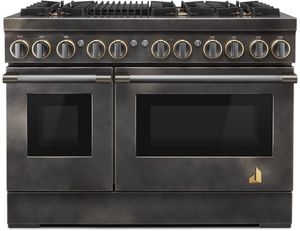
When the range is meant to be the focal point of the room, finish matters as much as output. The Distressed Smoke treatment gives this 48-inch pro style range a darker, textured presence that reads as designed rather than dropped in. Dual fuel is the reason to choose it functionally, pairing gas burners you can control by eye with an electric oven that holds a steadier baking temperature. That is the combination described earlier for cooks who sear hard and bake often. Plan gas sizing, electrical, and hood width around it before install day.
Top Features
- 48-inch pro style width: Gives you room for multiple large pans at once and anchors the cooking wall visually.
- Dual fuel configuration: Gas burners for instant flame response, electric oven heat for even, repeatable baking.
- Distressed Smoke finish: A textured dark treatment that separates the range from standard stainless in a design-led kitchen.
- Professional build detailing: Heavy grates, substantial handles, and knob feel consistent with the pro style category.
Viking Tuscany 66” Pure White Pro Style Dual Fuel Range with Griddle
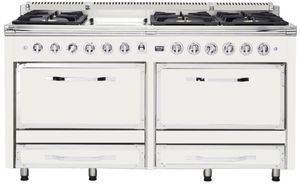
Cooking for a crowd is a width problem before it is a problem, and 66 inches solves it outright. The Tuscany line pairs that span with an integrated griddle, so pancakes, smash burgers, and vegetables cook alongside pots instead of waiting their turn. Pure White is a real design statement against dark cabinetry or brass hardware. A range this wide demands planning: matching hood width and capacity, correctly sized gas supply, dedicated electrical for the oven side, and a cabinet layout drawn around it from the start. Built for households that entertain often.
Top Features
- 66-inch cooking span: Exceptional simultaneous capacity for holiday cooking and regular batch entertaining.
- Integrated griddle surface: A dedicated flat cooking zone for breakfast volume without a separate appliance.
- Dual fuel design: Gas burner control on top paired with electric oven heat for consistent baking results.
- Pure White finish: A striking alternative to stainless that works with color-driven and traditional kitchen palettes.
- Layout-defining footprint: Sets hood width, cabinetry, and countertop planning for the entire cooking wall.
Café 48” 28.6 Cu. Ft. Stainless Steel Smart Built-In Side-by-Side Refrigerator
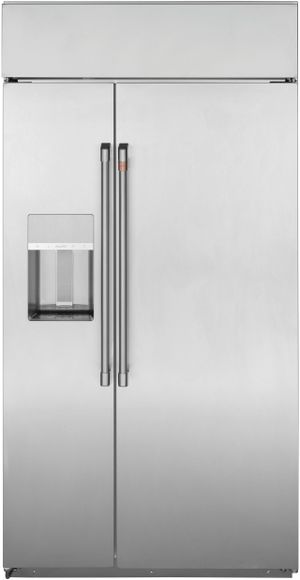
This is the flush cabinetry look without the column price. At 48 inches wide with 28.6 cubic feet inside, it delivers full built-in presence and enough capacity that a household shopping for six or eight does not need a second unit. Built-in construction means it trims into the cabinet run and sits close to flush with surrounding fronts, which is the integrated appearance discussed in the refrigeration section. Smart connectivity adds remote monitoring and door alerts. Confirm rough opening width, height, and grille clearance before the cabinet shop builds around it.
Top Features
- 48-inch built-in width: Fills a dedicated refrigeration opening and reads as part of the cabinetry rather than an added box.
- 28.6 cubic feet of capacity: Large-household storage without splitting cold storage into two separate units.
- Side-by-side configuration: Full-height fresh and frozen sections keep everyday items at a comfortable reach.
- Smart connectivity: Remote monitoring and alerts, including notification when a door is left open.
- Café design language: Coordinates with the brand’s customizable hardware and finish program across the kitchen.
Thermador Masterpiece 30” Stainless Steel Oven Micro Combo Electric Wall Oven
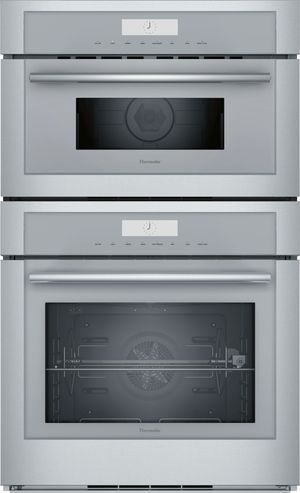
Shop Electric Oven-Micro Combo Built-In
For kitchens that separate cooking from the range, this is the tower argument in one appliance. A full electric wall oven and a microwave stack into a single 30-inch cabinet opening, freeing the island or cooking wall for a cooktop while putting the oven at a comfortable working height. That layout suits two-cook households and anyone tired of bending to a low oven door. The Masterpiece styling keeps a clean stainless face that aligns with cabinet fronts. Budget for a dedicated 240-volt circuit and confirm the cabinet cutout dimensions early.
Top Features
- Combined oven and microwave: Two cooking appliances in one 30-inch tall cabinet opening instead of two separate cutouts.
- Comfortable working height: Eye-level access removes the bending required by a range-mounted oven.
- Masterpiece design detailing: Clean stainless styling built to align with surrounding cabinet faces.
- Cooktop pairing flexibility: Frees the cooking wall or island for a separate cooktop and its own ventilation plan.
Vent-A-Hood 60” Black Contemporary Island Range Hood
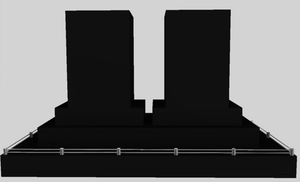
Ventilation is the category buyers under-budget most, and an island cooktop makes it harder rather than easier. At 60 inches wide, this hood is sized to cover a wide cooking surface with margin on both sides, which matters on an island where nothing blocks cross-drafts. The black contemporary finish keeps a hood this large from overwhelming the room. Island mounting adds two planning items a wall hood avoids: a vertical duct run through the ceiling and a soffit or structural blocking detail. Sort both out during framing.
Top Features
- 60-inch island width: Wide enough to cover a large cooking surface with capture margin on both sides.
- Island mounting design: Built to hang over an island cooktop rather than mount against a wall.
- Black contemporary styling: A darker finish that keeps a large canopy visually calm above the island.
- Ceiling duct planning: Requires a vertical duct route and blocking that should be coordinated during framing.
Ready to Choose Your Luxury Kitchen Appliances? Start in Our Modesto Showroom
Luxury is measured in build quality, precision, and preservation rather than in badges, brand choice should follow the way you actually cook and the integration look you want, and ventilation and installation planning is what protects the entire investment. Get those three right in that order and the rest of the project falls into line. Get them wrong and you pay for it in change orders.
Shop luxury kitchen appliances at Direct Appliance online, then bring your kitchen plan into the Modesto showroom for a real spec review. Our team works with these platforms daily and can check rough openings, hood capacity, gas sizing, and panel specifications against actual cut sheets before your cabinet order goes out. Our own crews handle delivery and professional installation, including panel-ready and flush work that needs experience to look right, and our service department is here in the Central Valley after the sale. That is what buying from a local independent retailer gets you instead of a big-box handoff or an online seller with a tracking number and no phone number.
Frequently Asked Questions about Luxury Kitchen Appliances
Luxury kitchen appliances are worth it for households that cook most nights and plan to stay in the home, because heavier construction, precise heat control, and better food preservation pay off daily over fifteen to twenty years of use. For a rarely used kitchen, the accessible premium tier delivers most of the visual result for considerably less money.
Budget in two parts: the appliance suite at your chosen tier, plus a separate allowance for ventilation, custom panels, gas sizing, dedicated circuits, and professional installation. That second line routinely adds a meaningful percentage on top of the appliance total, and leaving it out is the most common reason a remodel budget breaks.
Built-in appliances are trimmed into cabinetry with a finished factory front, panel-ready models accept a custom cabinet panel supplied by your cabinetmaker, and fully integrated units add hidden hinges, vents, and controls so the appliance disappears completely. The main practical difference is who supplies the front and how much cabinetry work the installation requires.
A hood should be at least as wide as the cooking surface, and a thirty-six to forty-eight-inch professional range generally calls for roughly twelve hundred to fifteen hundred CFM, while a thirty-inch standard range typically needs four hundred to six hundred. Always confirm the figure against the appliance spec sheet and the local code requirement, since duct length, elbows, and make-up air rules affect the final answer.
The brands easiest to service are the ones with a factory-authorized technician near you and reasonable parts lead times, which in practice favors platforms with published parts diagrams and established local networks. Ask about certified service coverage for your specific brand before buying, because a great appliance with no nearby authorized tech becomes a long wait every time it needs attention.
Buying a suite within one brand family usually earns the best package rebates and keeps handles, finishes, and panel alignment consistent across the kitchen. Mixing brands makes sense when one manufacturer clearly leads in a category you care about, such as refrigeration or steam cooking, and you are willing to trade some rebate value for it.
Shop Luxury Kitchen Appliances at Direct Appliance
Visit one of our two appliance showrooms to experience the benefits of buying locally with the help of our knowledgeable staff. You can also shop for appliances online! Our friendly experts are always ready to assist you in finding the best appliance in Modesto and Jamestown, CA. Whether you call us at 209-238-3000, use our online chat feature, or come by in person, we're here to help!